
Name declarations and German naming law
German naming law decides what your legal German name is, and it does not simply accept what an American document says. Where the two diverge, a declaration settles which name German records will carry.
When one is needed
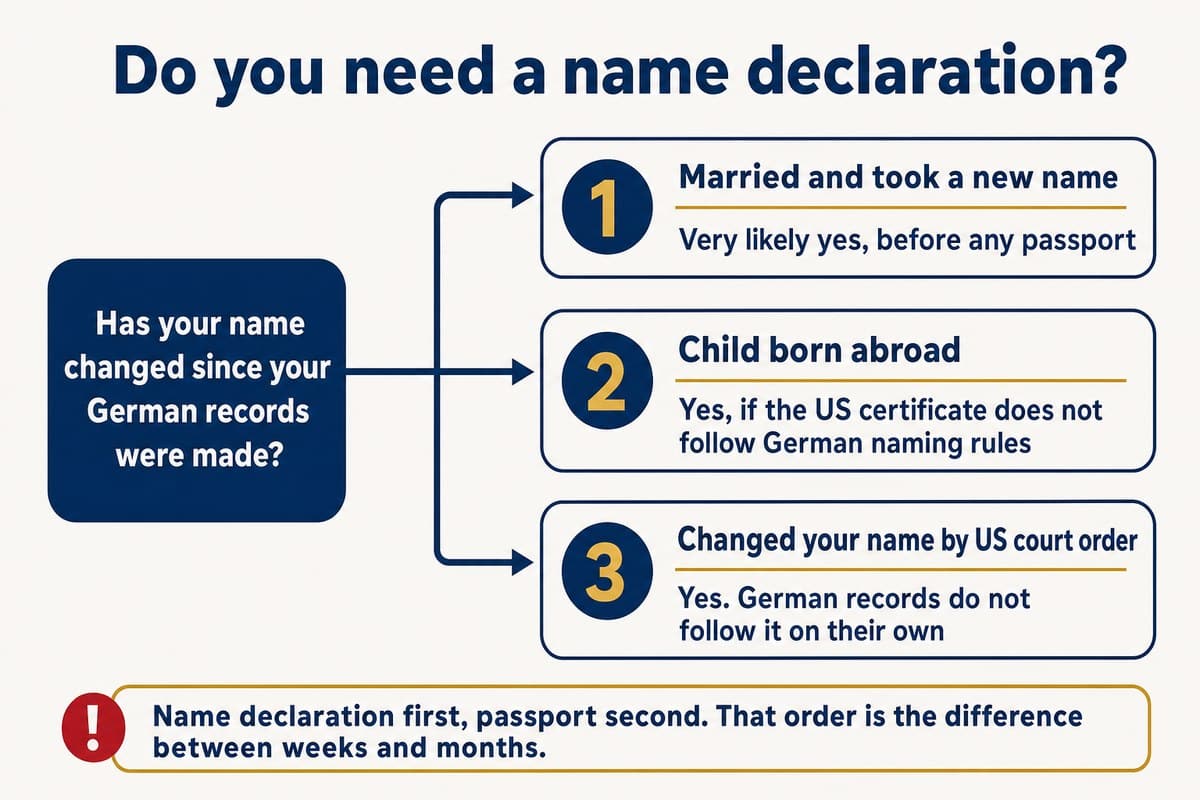
After a marriage, if you took a name that German records do not reflect.
For a child born abroad, when the name on the US birth certificate does not follow German naming rules or when the parents want to choose which law applies.
After a US name change, which German records do not follow automatically.
The mission will tell you at the appointment, and this is why an apparently routine passport renewal sometimes turns into a longer procedure.
What it costs
Certifying the signature on the declaration costs 85.00 €.
Certifying the original documents that accompany it adds up to up to 33.00 €.
Applying through an honorary consul means those fees are paid in cash in US dollars, like the passport fee.
The order to do things in
Name declaration first, passport second. Doing it the other way round is what produces the long delays.
The declaration is registered in Germany, so the timeline is set there.
If you are registering a birth, deal with the name at the same appointment. It is the single most common cause of a second trip.
Fees around a name declaration
| What | Fee |
|---|---|
| Certifying the signature on a name declaration | 85.00 € |
| Certifying the original documents with it | up to 33.00 € |
| Through an honorary consul | Cash in US dollars only |
Which case applies to you
- Your German and US identity documents
- The marriage certificate, divorce decree or court order that changed the name
- Birth certificates for everyone the declaration covers
- Your previous German passport
- The fee, in cash and in dollars if you are going to an honorary consul